Board and train vs private lessons for Metro East dogs
You've got a dog who pulls on leash, won't listen around distractions, or shows anxiety around other dogs. You know help is necessary. The question is whether to send your dog away for Board and Train or schedule private lessons at home. Both work. They work differently. Here's what each does and which fits your situation in the Metro East.
Which training format gets faster results?
Board and Train gives your dog more repetitions, more consistency, and more professional attention in two weeks than most dogs get from months of weekly lessons. Your dog lives and learns under professional care at a training facility, receives intense training daily, and sticks to a routine. Private lessons are one-on-one training sessions where the trainer works with you and your dog together, at your home or a neutral location.
The timeline difference matters when your dog's behavior is making daily life difficult. Board and Train in Fairview Heights or Belleville compresses weeks of work into days because your dog practices commands multiple times every day with a professional who can correct mistakes the moment they happen. Private lessons spread that same work across weeks or months, with one session per week and homework in between.
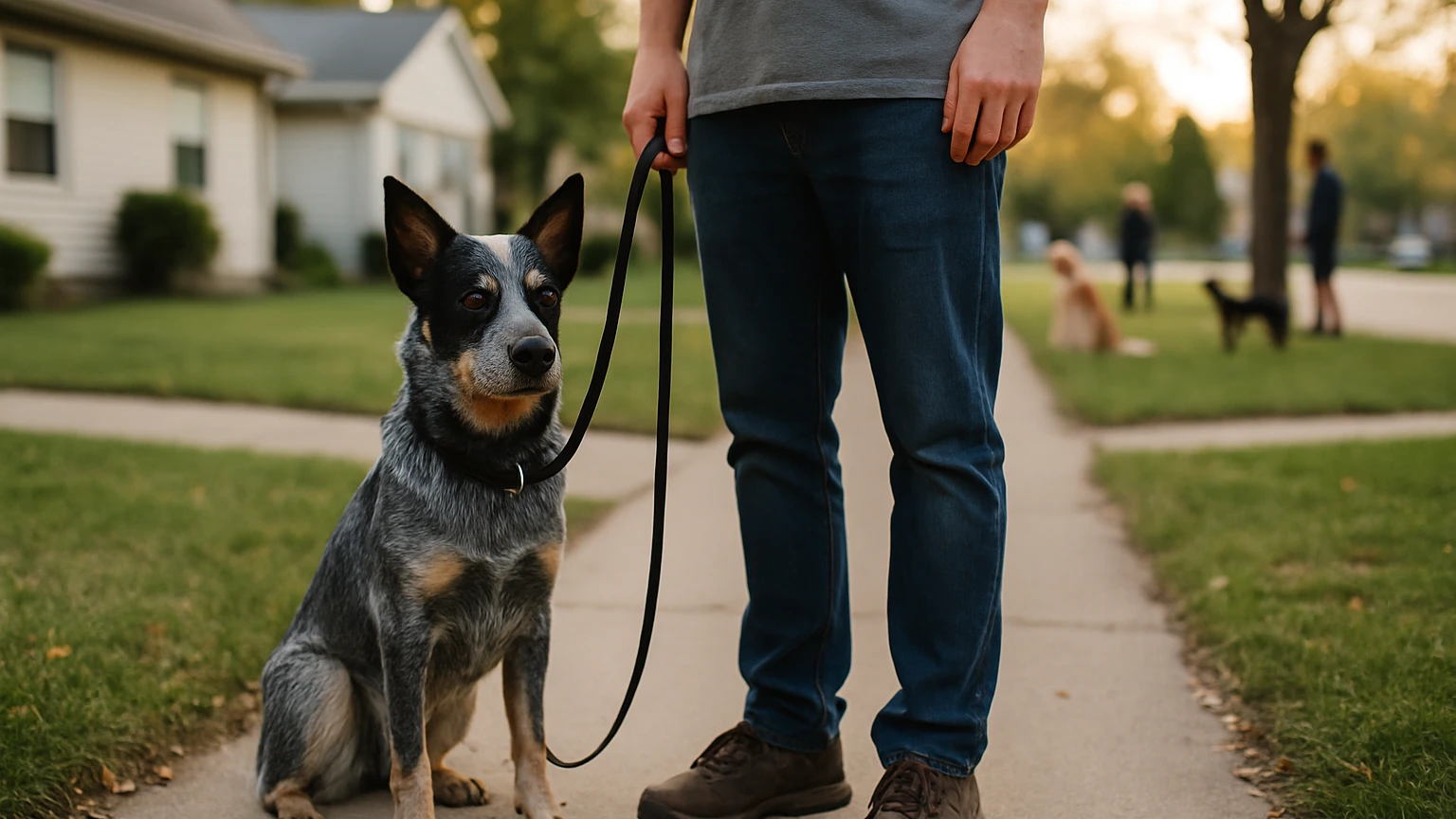
If you need your Blue Heeler to stop pulling you down the driveway or your rescue to handle other dogs without lunging, Board and Train builds that foundation faster. Private lessons work when the problem is manageable and you have time to practice between sessions.
Who does the training in each format?
Private lessons are one-on-one sessions where a trainer comes to your home or meets you at a location, and the trainer isn't training your dog, they are training you to be the trainer. You learn how to read your dog's body language, when to correct, when to reward, and how to structure your day so the training sticks. You are responsible for doing the homework between sessions.
Board and Train puts a professional trainer in control of the teaching phase. Dogs are actively training throughout the day with a qualified trainer. At Marmon Family Dog Training in Metro East, Aaron trains your dog using the Motivational Method and sends you detailed videos after every session so you see what your dog learned and how to maintain it when your dog comes home. The videos are the transfer mechanism. You watch. You learn. You take over when your dog is back in your house.
Private lessons put you in the room from day one. You build the skill of training your dog yourself. Board and Train front-loads the professional work, then hands off the maintenance to you with clear instructions.
What types of problems does each format handle best?
Board and Train handles serious behavior issues and time constraints; private lessons handle manageable problems and owner skill-building. Board and Train makes sense when your schedule makes weekly sessions difficult to manage consistently, your dog needs intensive work on a specific behavior problem, you want results quickly and have the budget for it, or your dog does better with an immersive structured environment rather than brief periodic lessons. Dogs with serious reactivity, aggression history, or anxiety often benefit from the immersion that Board and Train provides.
Private lessons are ideal when you want to be directly involved in every step of your dog's training, your dog's issues are relatively contained and do not require intensive daily work, you have a consistent schedule and can maintain the work between sessions, and budget is a consideration, as private lessons cost less upfront. Private lessons also work well for puppies whose owners want to build the relationship from the start.
In Edwardsville, Collinsville, and O'Fallon, dog owners dealing with high-anxiety dogs, leash aggression, or dogs who won't listen around distractions get faster progress with Board and Train because the controlled environment eliminates the variables that make training at home inconsistent. Your dog learns the command in a distraction-free setting first, then the trainer proofs it in real-world environments before your dog comes home.
Private lessons work when the issue is basic obedience for a puppy, polite leash manners for a young dog, or minor jumping and mouthing problems that don't require round-the-clock supervision.
Does the training hold after Board and Train ends?
Board and Train does not fix your dog. It creates the foundation for you to build off of. The dog learns the commands with the trainer. You learn how to maintain those commands through handoff sessions and videos. No training lasts without the owner doing their part. Every Board and Train program ends with a handoff session where the trainer works directly with you to transfer what your dog has learned.
At Marmon Family Dog Training, Aaron sends daily videos during the Board and Train program so you're not watching your dog transform without understanding how it happened. When your dog comes home to Belleville or Swansea, you've already seen the commands on video. You know what down looks like. You know what heel looks like. You know how Aaron corrects when your dog breaks position. The videos close the gap between what the trainer did and what you need to do.
A dog who walks beautifully for a trainer but pulls you down the driveway has not learned the whole lesson. That is the central question in board and train vs private lessons: not where your dog learns, but whether the learning carries over to the people, places, routines, and pressures of everyday life.
Private lessons eliminate that transfer problem because you're the one doing the training from the start. The trade is speed. It takes longer.
Which format fits a working family in Metro East?
Board and Train fits families who don't have two hours a week to practice between sessions or who need the problem fixed now because the dog's behavior is affecting quality of life. You drop off. Aaron trains. You get videos. Your dog comes home with the commands installed. You maintain them.
Private lessons fit families who want to be hands-on, have predictable schedules, and can commit to practicing drills three or four times a week between trainer visits. Private lessons are often more flexible in terms of scheduling, allowing you to find a time that suits your daily routine. This flexibility can be particularly helpful for busy individuals or families.
The Metro East schedule is real. You work. Your kids have sports. Your dog is pulling on leash every morning and jumping on visitors every evening. If you can't carve out practice time consistently, Board and Train is the better structure. If you can, private lessons build your skill as a trainer while fixing the problem.
What to do next
If your dog's anxiety, pulling, or reactivity is making walks stressful and you need the problem handled in weeks instead of months, Board and Train gets you there faster. If you want to learn how to train your dog yourself and have the time to practice, private lessons put you in control from day one. Either way, you're working with a disabled veteran with over 10 years of experience who sends detailed videos so you know what your dog learned and how to keep it going. Start your board and train inquiry here.